Welcome to the Citizens’ Advice Adviser Responding to Suicide Tool
To support advisers supporting clients.

See

There can be many signs that someone is having thoughts of suicide, or none at all. But these are some examples of things to look out for
| What someone may be saying | What someone may be feeling | What someone may be doing |
| “I just want to get out of everyone’s way.” “Others would be better off without me.” “I want to end it.” | Hopelessness Despair A burden | Getting their affairs in order Risky behaviours Actively looking for ways to end their life |
These factors are known to increase the risk of suicide:
- Previous suicide attempt
- Access to means of taking their own life
- Alcohol or substance use
- Relationship conflict
- Reduced coping skills
- Feeling isolated
- Bereavement by suicide
- Chronic pain
You can read about more suicide warning signs here.

Say

It is important to establish if someone is thinking about suicide. Saying the word suicide won't make it happen.
If you see any signs, ask directly, clearly, compassionately, and without judgment: "Are you having thoughts of suicide?"
Reflect on what they have said to form your question: "You have told me that you feel **. Does this mean that you are considering ending your life?"
| Give reassurance | "Thank you for being open about that. These thoughts are common, and there is support for you to stay safe." |
| Allow time | You don't have to fill the silence. |
| Focus on them | "I'm listening." Avoid interruptions – switch off your phone. |
| Be honest | "I may not be the best person to help you with this but I can make sure you are in touch with someone who can, is that OK?" |
| Explain | Be open that you can't keep confidentiality if the person is at risk of harm. |
| Offer help | "Would you like me to get you some help?" |
Here are some listening tips from the Samaritans.
Asking about suicide will:
- Make sure that you know if they are thinking about suicide
- Show that it's okay to talk about suicide, and gives permission to open up when they are ready. It might just save their life!
If you have established that the conversation is about suicide, inform your manager or supervisor whilst continuing the conversation with the individual.

Safety

Safety is key.
If you have any concerns about the individual or anyone else's immediate safety or risk to life, call 999.
If you have any doubts about breaching confidentiality, speak to a member of the Senior Management Team.
Police will respond when there is an immediate risk to life, or serious harm.
Checklist
- Check whether they have already done something to harm themselves. If injuries are life-threatening, or if in doubt,
- Check if they have any plans or intentions to act on their thoughts of suicide immediately or in the near future
Staying safe for now
- Explore and ask open questions
- Listen carefully for a word or sign which indicates uncertainty about suicide (a pause, a "but" or an "if only")
- Reflect this back and explore it gently with them
- Ask them if they can agree to "stay safe for now"
If you are struggling to hear the uncertainty it's OK to say: "I can hear that everything is difficult right now, but if we can agree to stay safe for now we can explore how to manage your [debt / homelessness / addiction]…"
Safety plan
Expand to read more about creating a safety plan
If you are able, support the individual through thinking about their own safety plan to stay 'safe for now', until they access further support: Staying Safe

Signpost

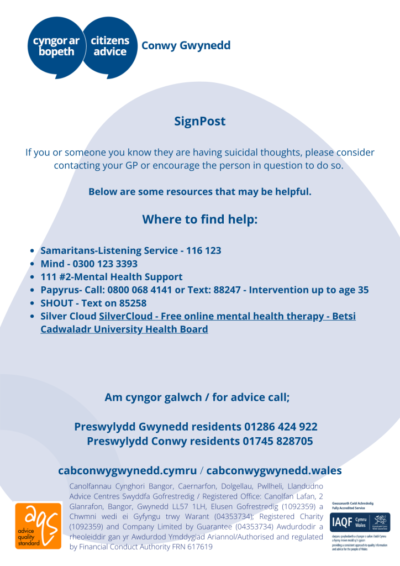
If you have established that the person is not at risk of immediate harm, signpost to services which can support them in the longer term.
| 111 – Press 2 Free, 24/7, Bilingual To be placed in direct contact with a mental health professional in your area. They will advise on the appropriate support and make referrals. |
 111 Press 2 – Mental health support for all – Betsi Cadwaladr University Health Board |
| Samaritans Free, Listening service English: 116 123 (24/7) Welsh: 0808 164 0123 (7pm – 11pm) |
 Contact a Samaritan | Samaritans |
| Papyrus Hopeline Free, 24/7 For young people under 35 or a 'concerned other' |
 HOPELINE247 | Papyrus |
| C.A.L.L. Free, 24/7 Community advice and listening line To find out about local support |
 C.A.L.L. Mental Health Helpline – Community Advice and Listening Line |

What next?
Suicide and Self Harm Programme

Inform, follow up, and take care of your wellbeing.
Inform
- Update your manager / supervisor
- Write a detailed case note
Follow up
If you can, follow up with the individual to check if they are OK and have received the support needed.
Your Wellbeing
It is important to give yourself time to process the conversation that you have had. Do not move straight on to the next task.
Speak with your line manager or a colleague/duty 'buddy'.
Papyrus Confidential Professionals De-brief service: Call HOPELINE, 24/7, and ask for a debrief – 0800 068 4141 or text 88247.
Other links
Support After Suicide – Home – National Advisory and Liaison Service Cymru
Mental Health Support – Mental Health Hub – Betsi Cadwaladr University Health Board
To learn more

Leaflets